



Overview
The WHO’s 2025 Global Hypertension Report estimates that around 30% of Indians aged 30–79 had hypertension in 2024, representing roughly 210.2 million people. Only about 17% had their blood pressure under control, leaving approximately 173.9 million without controlled BP.
If you are applying for a term insurance plan with high blood pressure, one important thing to know is that hypertension does not automatically disqualify you from getting coverage.
In this guide, we explain how hypertension affects term insurance eligibility and premiums, what insurers assess during underwriting, when they charge extra or decline an application, and how to disclose your medical history accurately.
Can You Buy Term Insurance With High Blood Pressure?
Yes, people with hypertension can buy term insurance, but approval isn’t automatic. Insurers assess the applicant’s medical history, medication, and any related complications before deciding on eligibility and premiums.
Plans Available
- Axis Max Life Smart Term Plan Plus: Offers an accelerated terminal illness benefit of up to ₹1 crore. Smart Term Plan Plus offers a Cover Continuance benefit that lets you defer premiums for a year while keeping the policy active, but you must repay the deferred amount later.
- HDFC Life Click 2 Protect Supreme Plus: Lets you increase your life cover after key events such as marriage, childbirth, or a home purchase with a loan. Click 2 Protect Supreme Plus provides a Premium Break option that allows eligible policyholders to defer premiums for a year and repay them later.
- ICICI Life iProtect Smart Plus: Offers a Smart Exit option that may return eligible premiums during the specified period. Its Premium Break option allows eligible policyholders to defer premiums for a year. With iProtect Smart Plus, qualifying policies may also provide an accelerated payout of up to ₹3 lakh at claim intimation.
- Bajaj Life eTouch II: Offers an accelerated terminal illness benefit of up to ₹2 crore and flexible death benefit payouts through lump-sum or regular-income options. eTouch II offers a Premium Holiday add-on that lets eligible policyholders skip certain premiums without losing coverage immediately.
- Aditya Birla Sun Life Super Term Plan: Lets you increase your life cover after events such as marriage, childbirth, adoption, or buying a home. Super Term Plan offers a Cover Continuance benefit that allows eligible policyholders to defer premiums for a year. Some variants also offer an Early Exit Value.
Note: Policy issuance and the availability of benefits are subject to the insurer’s underwriting assessment. A term insurance medical test is conducted during underwriting, which includes blood pressure checks and additional assessments to help insurers evaluate your hypertension and overall health before deciding on coverage and premiums.
Medical tests required for underwriting are arranged and paid for by the life insurer. You may need multiple rounds of tests.
The insurer shares the medical reports after completing its underwriting decision.
Uncontrolled high blood pressure can increase the risk of heart disease. Insurers assess your BP readings and any related complications when deciding eligibility and premiums. If you have an existing heart condition, read our guide on term insurance for heart patients. You can explore Ditto’s term insurance guide for heart patients for more details.
Talk to an expert
today and
find
the right
insurance for you.


How Insurers Assess Hypertension & How It Affects Term Insurance Premiums
Insurers assess hypertension through medical questionnaires that ask about blood pressure readings, treatment history, medication, and related complications.
Here’s a snippet from ICICI Life's High Blood Pressure Questionnaire, which shows how insurers assess hypertension during underwriting.
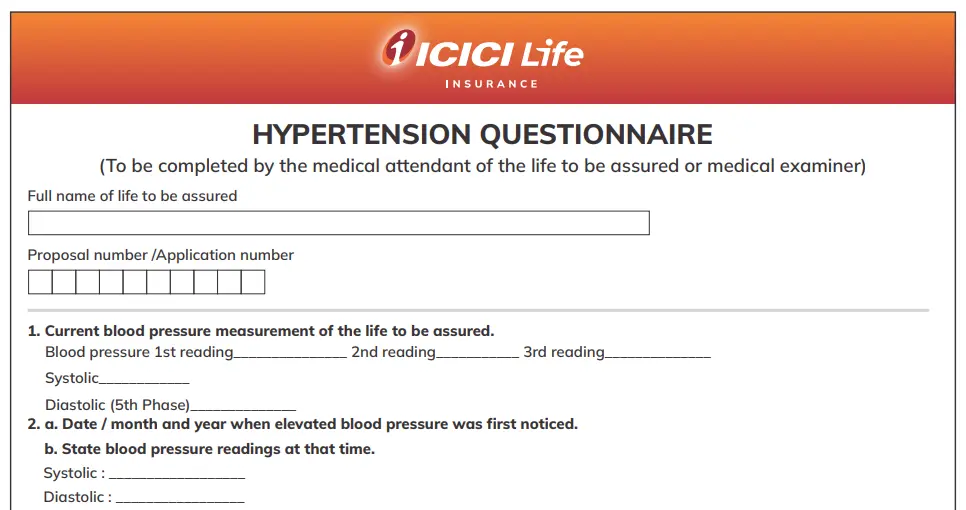
Note: The medical attendant or examiner completes the questionnaire by recording three current blood pressure readings, including systolic and diastolic values. They must also note when elevated blood pressure was first detected and the readings recorded then.
Various Stages of High Blood Pressure
Note: Clinical blood pressure categories can differ from insurer underwriting criteria. Insurers assess your actual readings alongside your medical history and overall health.
What Insurers Assess When You Have High Blood Pressure?
- Current Blood Pressure: Whether your readings are within a controlled range.
- Blood Pressure History: Whether your readings have remained stable or worsened over time.
- Treatment and Medication: How well treatment works and whether you need frequent changes or multiple medicines.
- Organ Damage: Whether hypertension has affected your heart, kidneys, eyes, or brain.
- Other Cardiovascular Risks: Whether you also have diabetes, high cholesterol, obesity, or a family history of heart disease. They also check if you’re a smoker.
- Treatment Compliance: Whether you take prescribed medication, attend follow-ups, and monitor your blood pressure regularly.
Note: High blood pressure can increase term insurance premiums because it may raise the insurer’s assessment of mortality risk. However, there is no fixed loading for hypertension. The outcome depends on your blood pressure readings, treatment history, age, and overall health profile.
For example, a 50% loading on a base premium of ₹20,000 would increase the annual premium to ₹30,000. This is illustrative only. The insurer can charge extra, postpone the application, or decline coverage. For estimating base premiums of some leading plans, use the Ditto term insurance premium calculator tool.
A family history of hypertension can affect the insurer’s risk assessment and lead to minor premium loadings on the base plan or riders, depending on the insurer’s underwriting guidelines.

Standard Rate, Loading, Postponement, or Rejection: What to Expect With Hypertension?
Standard Rates
If your hypertension is mild and well controlled with stable treatment and no other major risk factors, the insurer may offer standard premiums after reviewing your medical history.
Premium Loading
If your blood pressure is controlled but you have additional risk factors, the insurer may charge higher premiums (25% to 100%). The loading depends on your overall health and underwriting assessment.
Postponement
If your blood pressure is poorly controlled, your treatment has changed recently, or you have had a recent hospitalization, the insurer may postpone the application until your condition stabilizes.
Rejection
If hypertension is severe or unmanaged, especially alongside diabetes, high cholesterol, or related organ damage, the insurer may decline the application. Some health-related riders may also be restricted or unavailable.
How to Properly Disclose Hypertension to Avoid Term Insurance Claim Rejection
- Declare Your Diagnosis: State whether you have primary or secondary hypertension and mention when you were diagnosed. Share any relevant family history if the insurer asks.
- List Your Medications: Provide the names, dosages, and frequency of all blood pressure medicines you take. Include recent treatment changes and follow your doctor’s prescribed treatment.
- Complete Additional Medical Tests: The insurer can request an electrocardiogram (ECG), echocardiogram (ECHO), or treadmill test (TMT), along with your previous medical records, to assess your hypertension and overall heart health.
- Share Recent Blood Pressure Readings: Provide recent clinical readings and medical reports if requested. Accurate records help the insurer assess how well your blood pressure is controlled.
- Disclose Related Health Conditions: Mention other conditions such as diabetes, high cholesterol, or kidney problems. Insurers assess these alongside hypertension when evaluating your overall health risk.
- Review the Application Yourself: Read every answer before submission, even if an agent helps complete the form. Make sure the information matches your medical records and correct any errors.
- Declare Your Lifestyle Habits: Answer questions about smoking, tobacco use, alcohol consumption, and physical activity honestly. These details may affect how the insurer assesses your cardiovascular risk.
- Keep Medical Documents Ready: Retain prescriptions, test reports, and doctor consultation notes. These records can help clarify your medical history during underwriting or a future claim review.
Note: Recognizing hypertension symptoms such as persistent headaches or dizziness can prompt medical evaluation, but regular blood pressure checks remain important because hypertension often has no noticeable symptoms.
Why Choose Ditto for Term Insurance?
At Ditto, we’ve assisted over 12,00,000 customers with choosing the right insurance policy. Why customers like Aaron below love us:

- 100% Free Consultation
- No Spam. No Sales Pressure.
- Rated 4.9/5 on Google Reviews by 30,000+ Happy Customers
- Backed by Zerodha
- Dedicated Claim Support Team
- Compare Plans and Premiums with a Trusted Insurance Advisor
Confused about the right insurance? Speak to Ditto’s certified advisors for free, unbiased guidance. Book your call now or chat with us on WhatsApp. Slots fill up fast!
Conclusion
High blood pressure does not automatically disqualify you from purchasing a comprehensive term insurance plan. Compare the best term insurance plans, disclose your medical history accurately, and purchase adequate life cover. You can use the Ditto cover calculator to estimate your coverage needs.
Frequently Asked Questions
Last updated on: