



Overview
Life Insurance Corporation of India (LIC), established in 1956, is India’s largest life insurer by total first-year premium income. As of March 31, 2025, LIC managed total assets worth approximately ₹56.23 lakh crore, held a 57.05% market share in total first-year premium income, had 2,048 branch offices, and worked with more than 14.86 lakh agents.
When buying a life insurance policy, one question matters above everything else: will LIC actually pay my family’s claim? That is exactly what the CSR helps you understand.
What Is a Claim Settlement Ratio?
A Claim Settlement Ratio (CSR) represents the percentage of death claims an insurer successfully settles out of the total claims it was required to process in a given financial year. It is the single most cited metric for judging how reliably an insurer pays up.
For instance, if LIC receives 10,000 death claims and settles 9,815 of them, its CSR for that year is 98.15%. The higher the ratio, the more dependable the insurer is generally considered to be.
How To Interpret CSR:
- 97% and Above: Indicates a strong, efficient, and highly reliable insurer with a high claim settlement track record.
- 90%-97%: Most claims are settled, but you should review other metrics before deciding.
- Below 90%: May signal higher chances of delays, rejections, or an inconsistent claims experience.
Note: LIC's CSR for FY 2025-26 sits in the 'strong' range. While a handful of private insurers now cross 99%, LIC's performance across over 8 lakh claims per year makes its ratio especially meaningful.
Want to go beyond the interpretation? Ditto Data Lab features detailed term insurance data from insurers and IRDAI, collected from official sources and curated by our team.
How to Calculate the LIC Claim Settlement Ratio?
Here's how the LIC claim settlement ratio is calculated:
Claim Settlement Ratio = Claims Paid ÷ Claims Processed × 100
For LIC’s FY 2025-26 individual death claim data, claims processed broadly include:
- Claims paid
- Claims repudiated
- Claims rejected
Pending claims should be reviewed separately because they indicate settlement delays, not claim denial.
So, for LIC, the broad calculation is:
CSR = Claims Paid ÷ (Claims Paid + Claims Repudiated + Claims Rejected) × 100
This gives LIC a claim settlement ratio of 98.10% for FY 2025-26.
At Ditto, we recommend evaluating CSR alongside other key metrics such as the Amount Settlement Ratio (ASR), complaint volume per 10,000 claims, Gross Written Premium (GWP), and solvency ratio. This is because CSR only tracks the number of claims settled, not the value. An insurer could settle a high volume of smaller claims while disputing larger ones, resulting in a high CSR but a low ASR. Looking at multiple metrics together gives a more accurate picture of an insurer’s true claims reliability.
Talk to an expert
today and
find
the right
insurance for you.


Where Can I Find the Claim Settlement Ratio for LIC?
You can check the LIC claim settlement ratio from the following verified sources:
- IRDAI Annual Reports or Handbook on Indian Insurance Statistics, published annually on irdai.gov.in, around December for the preceding financial year.
- Life Insurance Corporation of India Public Disclosures (Form L-40), available on licindia.in under the Investor Relations or Financial Disclosures section.
- Ditto Insurance, which provides regularly updated CSR data verified against IRDAI sources, along with expert context and insurer comparisons.
LIC: 3-Year Claim Settlement Ratio and Other Metrics
Note: All this data is sourced from IRDAI annual reports and the insurer’s public disclosures.
Key Insights
- CSR: Despite handling the highest individual death claim volume in India, LIC maintains a CSR consistently above 97%, a stronger reliability indicator than the marginally higher CSR achieved by insurers operating on a much smaller scale.
- ASR: LIC's amount settlement ratio is higher than the industry average, indicating that not only are claims being settled, but a larger proportion of the claim value is being paid out.
- Complaints: LIC records significantly lower complaint volumes per 10,000 claims compared to the industry median, suggesting a relatively smoother claims experience and fewer disputes during settlement.
- GWP: LIC collects the highest gross written premium among all life insurers in India, reflecting both its scale and the sustained trust of its policyholder base.
- Solvency ratio: LIC maintains a solvency ratio of 2.15x, broadly in line with the regulatory requirement. This indicates that the insurer holds adequate capital buffers to meet future claim obligations comfortably.
Top 10 Term Insurance Providers by Claim Settlement Ratio
Key Insight: Even with a 3-year average CSR of 98.15%, Life Insurance Corporation of India narrowly misses the top 10 list, primarily because private insurers now consistently exceed 99%. However, LIC's performance at its massive claim volumes remains genuinely impressive and should not be discounted when evaluating its term insurance claim settlement reliability.
Why Choose Ditto for Term Insurance?
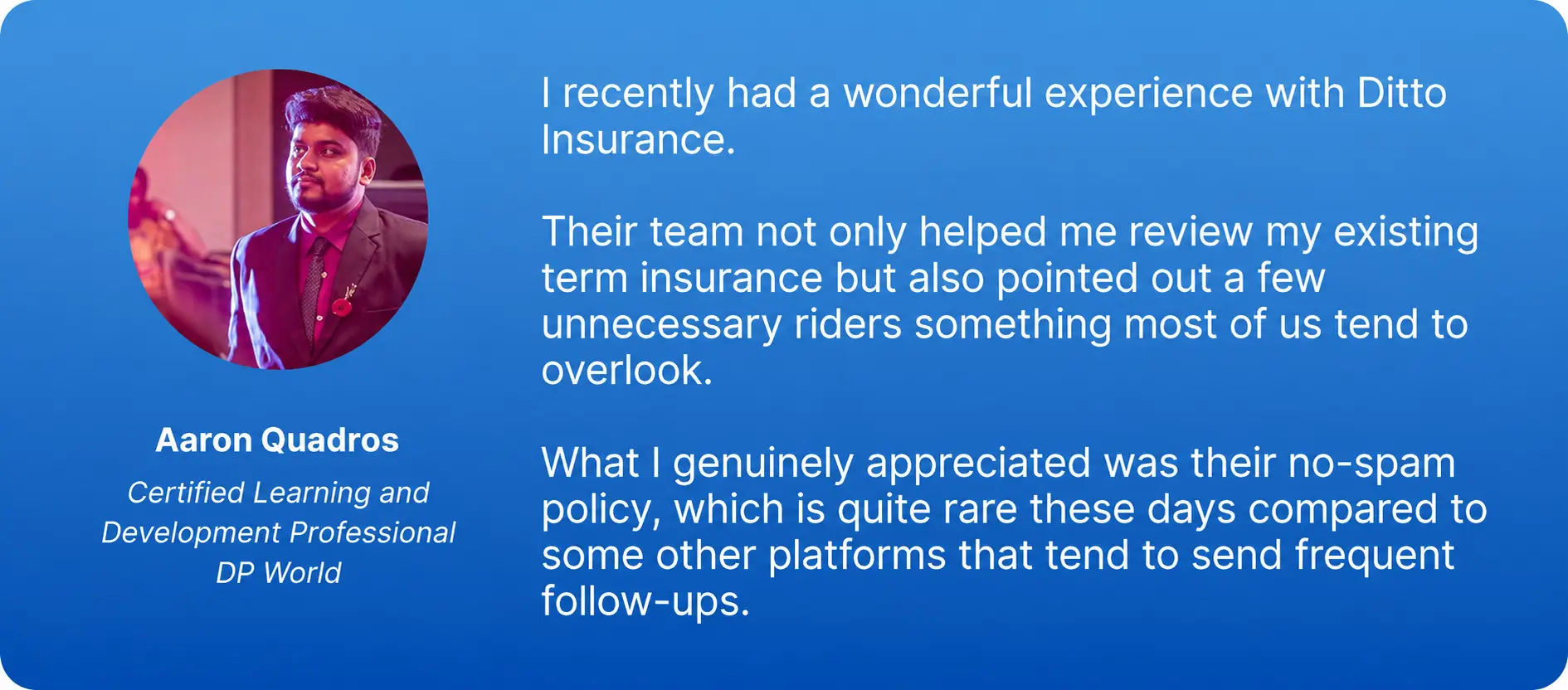
At Ditto, we’ve assisted over 12,00,000 customers choose the right insurance policy. Why customers like Aaron love us:
- 100% Free Consultation
- No Spam. No Sales Pressure.
- Rated 4.9/5 on Google Reviews by 30,000+ Happy Customers
- Backed by Zerodha
- Dedicated Claim Support Team
- Compare Plans and Premiums with a Trusted Insurance Advisor
Confused about the right insurance? Speak to Ditto’s certified advisors for free, unbiased guidance. Book your call now or chat with us on WhatsApp. Slots fill up fast!
Ditto’s Take
LIC is one of the largest and most trusted life insurers in India. Its consistent claim settlement ratio, low complaint volume, and government backing make it a dependable choice for those who prioritize reliability above all else. On the downside, premiums tend to run higher and product flexibility is limited compared to leading private insurers, which is worth factoring in before you decide.
Overall, LIC is a solid, time-tested insurer with a claims track record that holds up well given the sheer scale at which it operates.
If you'd like to see how the insurer compares with other leading insurers, check out our detailed guide on the best term insurance plans in India.
Frequently Asked Questions
Last updated on: